New Orleans Parade Times: When Mardi Gras Parades Actually Start, Roll and End
The single most-asked question every Carnival season is not "which parade should I see?" It is "what time does the parade actually get here?" And the honest answer is: almost never the time printed on the schedule. The official start time is when the first float leaves the starting point - which might be two miles and ninety minutes away from where you are standing.
This is your local's guide to New Orleans parade times: what the official start times mean, how the timing really works day by day through Carnival season, and when you should actually show up so you catch the whole thing without standing on the neutral ground for four unnecessary hours.
The Golden Rule: Start Time Is Not Arrival Time
Every parade schedule lists one time - the moment the first unit rolls from the staging point. On the classic Uptown route, most parades start at Napoleon Avenue and Tchoupitoulas or nearby, then roll down St. Charles Avenue toward Canal Street.
What that means for you:
If you are standing near the start at Napoleon and St. Charles, the parade reaches you within about 15 to 30 minutes of the official start. If you are at Lee Circle, add roughly 60 to 90 minutes. On Canal Street at the end of the route, the first float may not appear until two hours or more after the listed start - and the last float can pass three to four hours after that.
A full parade takes about 45 minutes to two hours to pass any single point, depending on the size of the krewe and how smoothly it rolls. Super krewes with 30-plus floats, dozens of marching bands, and celebrity riders take the longest.
Typical Parade Times by Day
Carnival's parade calendar follows a rhythm that barely changes from year to year. Here is the pattern locals plan around.
Weekday Evenings (the two weeks before Fat Tuesday)
Weeknight parades typically start between 5:30 and 7:00 p.m. Uptown. Most nights feature two or three parades back to back on the same route, so the street stays busy from early evening until 10 or 11 p.m. The Thursday before Mardi Gras belongs to Muses, the famous all-female krewe whose glittered shoes are among the most coveted throws of the season - expect the route to be packed hours before its evening start.
Weekend Daytime
Saturday and Sunday daytime parades generally begin between 11:00 a.m. and 2:00 p.m., often with several krewes rolling in sequence. These are the most family-friendly slots of the season: daylight, milder crowds along most of the route, and a steady stream of floats all afternoon.
Super Krewe Weekend (the final weekend)
The last weekend before Fat Tuesday is the big one. Endymion rolls Saturday evening - and note that it runs a different route through Mid-City, not the Uptown standard. Bacchus takes Sunday evening on the Uptown route with its celebrity monarch and signature giant floats. Orpheus closes Lundi Gras (Monday) night. Evening start times hover around 4:15 to 6:00 p.m., but for these three, arrival strategy changes completely - see below.
Fat Tuesday: The Early Start
Mardi Gras day itself starts earlier than most visitors expect. Zulu begins around 8:00 a.m., famous for its hand-decorated coconuts. Rex, the King of Carnival, follows at about 10:00 a.m. After Rex, the truck parades - hundreds of decorated trailers - roll well into the afternoon. If you sleep in on Fat Tuesday, you miss half the day.
How Early Should You Actually Arrive?
Here is the honest local math, not the tourist-brochure version:
For a regular weeknight or weekend parade, arriving 45 minutes to an hour before the parade reaches your section of the route is plenty for a decent curbside spot along most of St. Charles Avenue. Skip the "get there four hours early" advice for ordinary parades - locals do not do that.
For Muses, Endymion, Bacchus, and Orpheus, the calculation flips. Prime viewing spots fill three to five hours ahead, and families stake out neutral-ground territory with ladders even earlier. Endymion's Mid-City route in particular sees people camping out from the morning.
For Fat Tuesday, dedicated spots along the Zulu and Rex routes are claimed around dawn. If you want the front-row experience, bring coffee and get there by 6:30 a.m.
Street Closures and Getting There
St. Charles Avenue and the surrounding blocks close to traffic one to two hours before each parade, and crossing the route mid-parade is nearly impossible. Two practical consequences:
Plan to be on the correct side of the route before the parade starts - the side where your dinner reservation, your hotel, or your parked car is. And do not plan to drive anywhere near the route on parade days. The streetcar stops running on the parade stretch during parades, rideshare surge pricing gets aggressive, and parking violations are towed enthusiastically. Walking or biking beats driving every time.
Do Parades Ever Run Late or Change Times?
Constantly. Parades are delayed by float breakdowns, gaps in the procession, and weather. Severe weather can shift start times earlier, compress multiple parades together, or move a parade to a different day entirely - decisions usually announced a day or less in advance. Lightning is the real schedule-killer; rain alone rarely stops a krewe.
The fix is simple: check same-day updates before you head out. Local news outlets and parade-tracker apps post real-time float locations during each parade, which tells you exactly how far away the first float is from your spot - the single most useful piece of information during Carnival.
The Local's Timing Cheat Sheet
Stand near the start of the route if your evening has a hard stop - you will see the whole parade earliest and be free while visitors downtown are still waiting for float one. Stand mid-route (the Garden District stretch) for the classic oak-canopy experience with a modest wait. Stand near Canal Street only if you enjoy the biggest crowd energy and do not mind that everything arrives an hour or two behind the printed schedule.
And the golden rule, one more time: the printed time is when the parade leaves - when it arrives is up to where you stand.
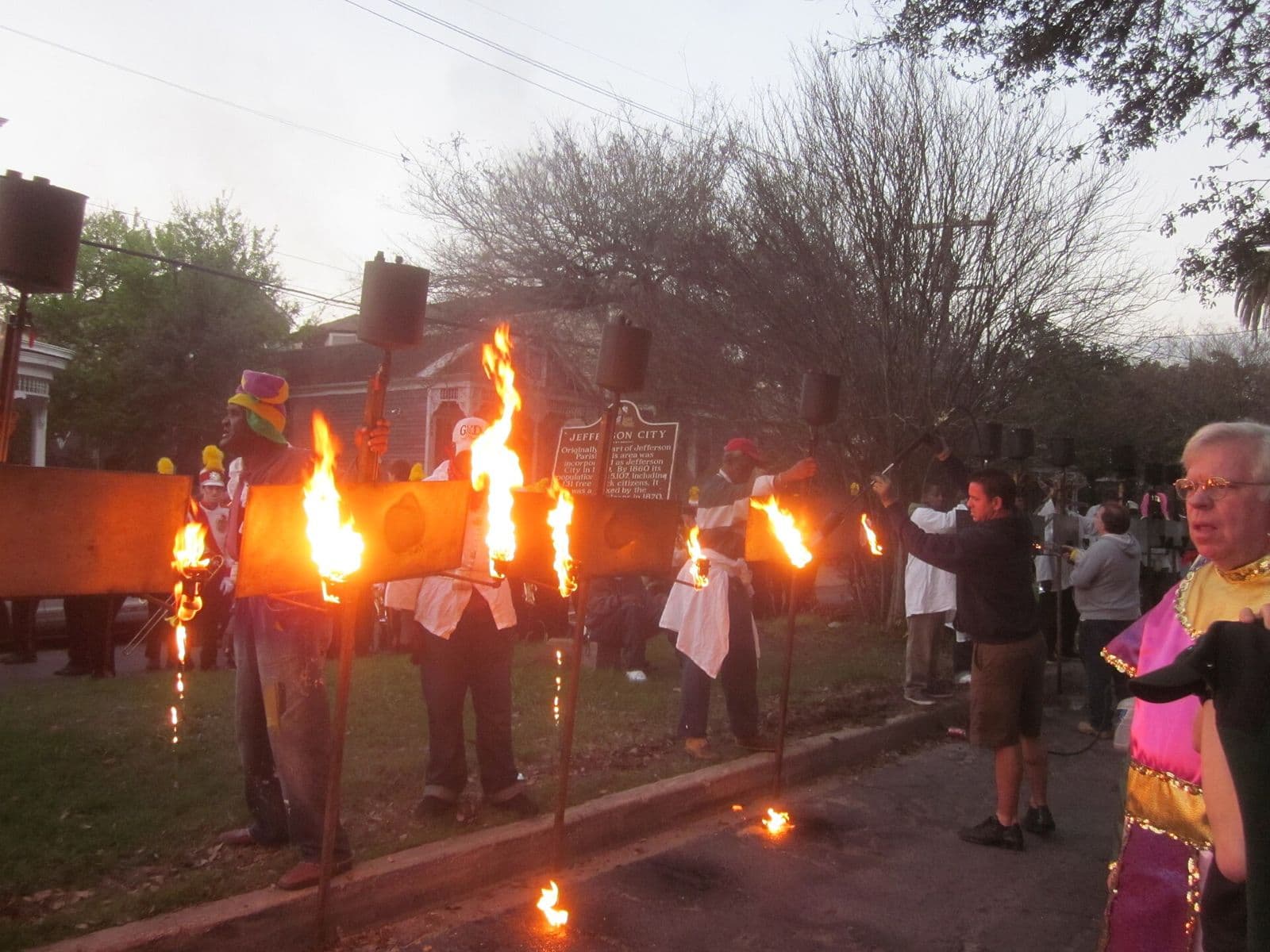
Cover photo: flambeaux on Jefferson Avenue, by Infrogmation of New Orleans, CC BY-SA 3.0, via Wikimedia Commons.

More from the Dispatch
The Mardi Gras Price Index: What a Hurricane, a Po-Boy and a Beignet Cost Over Time
We tracked what New Orleans staples cost on archived menus and set them against national inflation. The Hurricane and the po-boy fell behind, the beignet pulled ahead, and the Sazerac matched restaurant prices almost exactly.

Endymion 2027: Parade Date, Start Time, Route and the Extravaganza
Endymion rolls on Saturday 6 February 2027 at 4pm, confirmed by the krewe. Here is the Mid-City route, when the floats reach each stretch, where to watch, the city rules for claiming a spot, and what to know about the Extravaganza in the Superdome.
When Mardi Gras 2027 Parades Actually Start: The January Schedule
Carnival opens on 6 January 2027, but the big parades do not. Here is what rolls in January, what the quiet fortnight in between is really like, and why booking around Twelfth Night is usually a mistake.